Seminar Season: The $5,000 Real Estate 'Secret' That Only Works If You Sell It to Someone Else
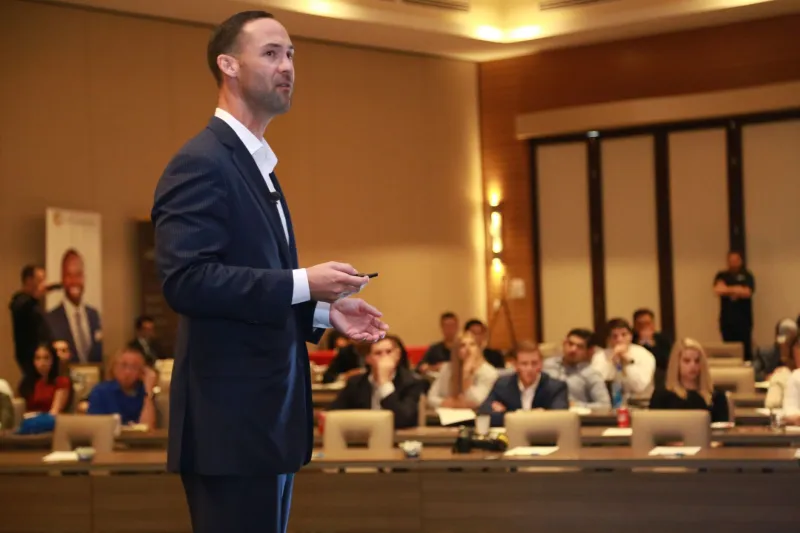
Somewhere in a hotel ballroom near you, a man in a very shiny suit is standing in front of a PowerPoint slide that reads "FINANCIAL FREEDOM IS ONE DECISION AWAY." The audience — retirees, nurses, middle managers who just listened to a Rich Dad Poor Dad audiobook — is leaning forward. The man on stage owns, he says, 47 properties across three states. He drives a Lamborghini. He has a photo with Donald Trump from 2009. He is, by every visual indicator, extremely successful.
He is also, very likely, making the overwhelming majority of his income from the people currently staring at him.
Welcome to the real estate seminar industrial complex — part motivational revival, part multilevel hustle, and fully a masterclass in monetizing FOMO.
The Pitch: Passive Income, Urgency, and a Suspiciously Vague Formula
The free or low-cost introductory seminar is the hook. You might find it advertised on Facebook, or maybe a local radio host endorsed it. Tickets are $49, or sometimes literally free. You show up and spend three hours watching a slick presentation about wholesaling, flipping, or building a rental empire. The speaker is charismatic. The testimonials are emotional. There's a countdown clock on the screen.
At the end, you're invited to the real training — a three-day weekend intensive that will give you the actual system. That's $997 to $1,997. A bargain, they say, compared to the cost of not knowing.
But the weekend intensive is mostly an extended commercial for the platinum mastermind program. That one runs $15,000 to $50,000. It comes with a coach, a community, and access to the guru's "private deal flow." Payment plans available. Some organizers have even encouraged attendees to open new credit cards on the spot to cover the cost — a detail that the FTC has noticed with increasing irritation over the years.
The Circular Economy of Guru Wealth
Here's the thing about real estate gurus: actual real estate is hard, slow, and capital-intensive. Good deals require local market knowledge, contractor relationships, access to financing, and the ability to survive a bad quarter. It is genuinely possible to build wealth through real estate — plenty of people do.
But teaching people to do real estate? That's scalable. That's a SaaS business disguised as a workshop. And critically, it has the same structural DNA as a classic Ponzi scheme: the returns promised to participants are primarily funded by recruiting new participants.
In the guru model, the "return" isn't cash — it's knowledge, community, and the promise of future deals. The revenue flows from students paying tuition, not from properties generating rent. Many prominent real estate educators have, upon scrutiny, been found to derive 80% or more of their documented income from courses, coaching, and licensing their brand to regional affiliates who run their own seminars and — you guessed it — recruit more students.
The FTC's 2019 action against Trump University (yes, that Trump University) laid out the mechanics plainly: students paid up to $35,000 for mentorship programs that largely taught them how to find more students. The settlement cost $25 million. The playbook, however, survived just fine.
Red Flags That Would Make Any Fraud Examiner Wince
Not every real estate education program is a scam. Some are genuinely useful, transparently priced, and taught by people who actually buy and sell properties. The distinction matters, and the red flags are pretty consistent:
The instructor's wealth comes from teaching, not doing. Ask directly: what percentage of your income in the last three years came from real estate transactions versus courses and coaching? If the answer is evasive or the ratio skews heavily toward education revenue, you're looking at a seminar business, not a real estate business.
The urgency is manufactured. Real investment strategies do not expire at midnight. If the pricing structure only makes sense if you decide right now, the pressure is a sales tactic, not a reflection of any genuine opportunity.
Testimonials replace track records. Emotional stories from students who "changed their lives" are not audited financial disclosures. Ask for verifiable, third-party documented case studies. The silence that follows is informative.
The upsell ladder is the product. When each level of training primarily prepares you to buy the next level, the education itself is the scheme. Real skills transfer. Perpetual upsells extract.
Vague legal structures and "proprietary systems." Legitimate real estate investing involves boring, well-documented legal frameworks: LLCs, title insurance, standard purchase contracts. If the guru's system is too proprietary to explain clearly, it's probably too proprietary to be real.
What Legitimate Real Estate Education Actually Looks Like
For contrast: community college real estate licensing courses cost a few hundred dollars and are regulated by state boards. Books by authors like John T. Reed (who has made a cottage industry of debunking real estate gurus) cost $30. Local real estate investor associations — many affiliated with the National Real Estate Investors Association — charge modest annual dues and connect you with actual local investors who have no financial incentive to oversell you anything.
The BiggerPockets platform offers free and low-cost resources, forums, and podcasts featuring investors who discuss real deals with real numbers, including the deals that went sideways.
None of these options involve a Lamborghini slideshow. That's probably a good sign.
The Uncomfortable Bottom Line
Passive income is real. Real estate wealth is real. But the fastest path to passive income in the real estate seminar world is to become the person running the seminar. The gurus aren't hiding this, exactly — they're just very good at making the audience feel like they're the future guru, not the current revenue source.
Before you hand over a credit card in a hotel ballroom, ask yourself one question: if this strategy is so reliably profitable, why is this person's primary business convincing strangers to pay for it?
That question alone is worth more than most $5,000 weekends.